Last reviewed: November 2026. This guide is general information. Check any product or service against your own organization’s needs before you commit to it.
Virtual reality (VR) replaces what you see with a computer-generated or filmed scene, usually through a headset. In travel it is used mostly before a trip, to let people look around a destination, hotel or attraction. Reviews of the research find that the feeling of “being there” is what drives its effect, and that most studies measure what people say they intend to do, not what they later book.
Key takeaways
- What matters most: a meta-analysis in Tourism Management confirmed presence, the sense of being in the place shown, as the core feature of AR and VR in tourism.
- Where it is used: a state-of-the-art review found most studies treat VR as a marketing tool, mainly in the pre-travel phase.
- Who it works on: the same meta-analysis found the effect of presence is weaker for people who have already visited the place.
- A known gap: studies commonly ask people whether they intend to visit after a VR experience. That is not the same as measuring bookings.
In this guide
How VR differs from AR
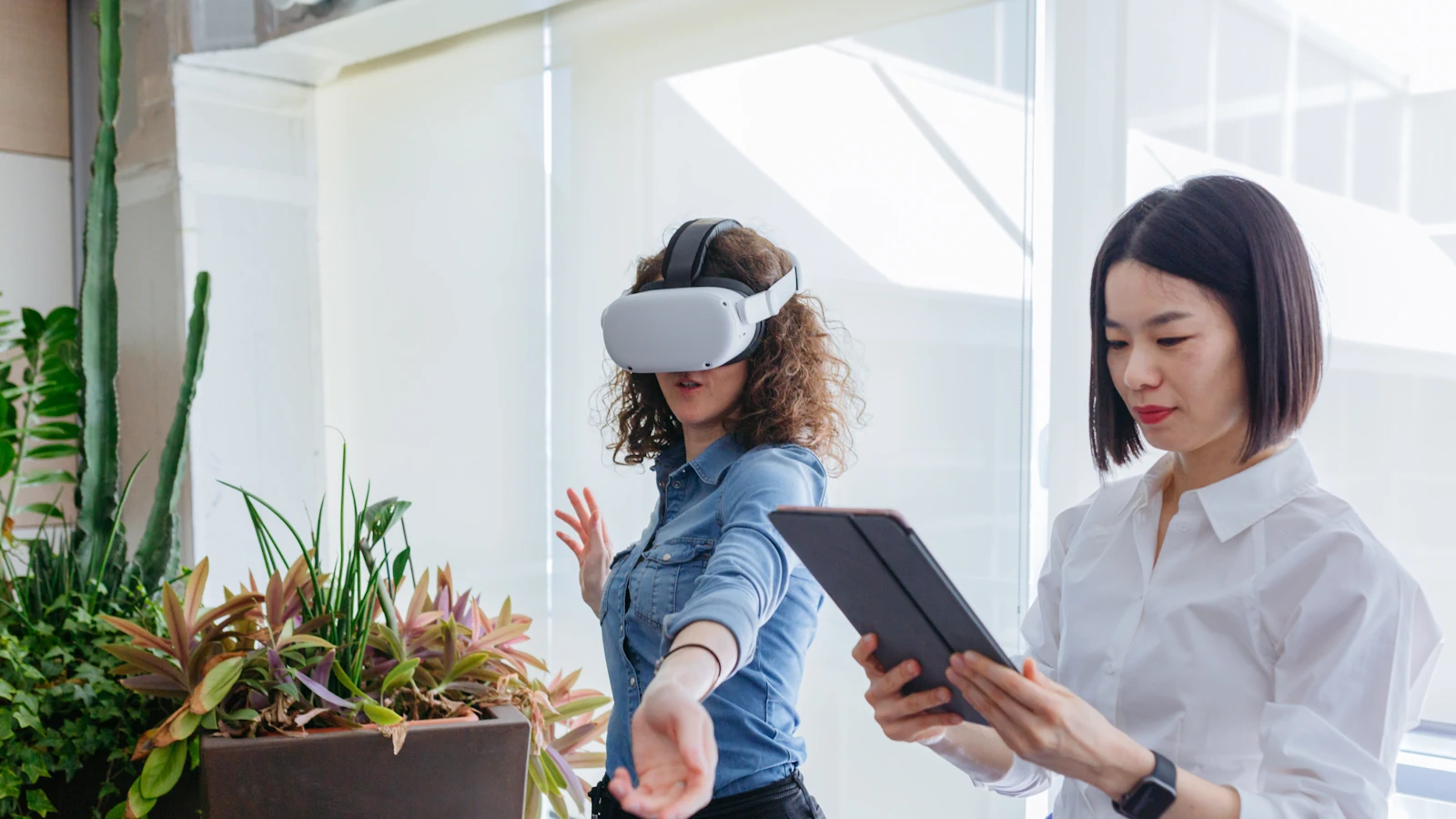
- Virtual reality takes the viewer out of the room they are in and puts a different scene in front of them. A traveler might put on a headset in a travel agency and look around a hotel lobby on another continent.
- Augmented reality keeps the viewer in the real place and adds digital content to it, usually on a phone. See our guide to augmented reality in travel.
Where VR is used in travel
A 2024 systematic review in the International Journal of Hospitality Management looked at 54 papers from high-quality journals. It describes VR being used to enhance travelers’ experience and to give destinations, attractions and businesses additional marketing tools, and it maps the research onto a nine-step consumer journey that runs from before a trip to after it.
- Before the trip. Previews of destinations, hotels and attractions. This is where most of the research sits.
- During the trip. VR exhibits at museums, visitor centers and attractions.
- In place of the trip. Virtual visits for people who cannot travel, or to sites that are closed or fragile.
What the research shows
- Presence is the core. A 2022 meta-analysis in Tourism Management examined AR and VR in tourism together and confirmed the importance of presence as the core feature of both. It found that the type of simulation and social interaction strengthen the effect of presence on the tourism experience.
- Prior visits weaken it. The same meta-analysis found that having visited the place before has a negative moderating effect. VR adds less for people who already know the destination.
- Mostly a marketing tool. A 2019 state-of-the-art review in Tourism Review found that, whatever the type of VR system, most studies treat VR as a tool for promotion and communication, mainly in the pre-travel phase.
- A fast-growing field. A 2023 systematic review in Sage Open covered 274 journal papers on virtual technology in hospitality and tourism from 2013 to 2022. It notes that the number of articles has risen sharply since 2019.
Limits of the evidence
A positive finding about VR does not mean a VR campaign will bring visitors. Much of the research works by showing people a VR experience and then asking them survey questions. One published dataset on VR and visiting intention, for example, measures agreement with statements such as intending or planning to visit the destination after the experience. Intention is a useful signal, but it is not a booking.
- Intention, not behavior. Few studies follow people to see whether they later travel.
- Novelty. Many participants are trying a headset for the first time, so some of the effect may come from the technology being new to them.
- Marketing focus. Because most studies look at promotion before a trip, less is known about VR during and after travel.
Questions to ask
- What will the VR experience show that photos and video cannot?
- Who is it for: people who have never visited, or returning guests?
- How will we measure results: bookings and enquiries, or only reactions on the day?
- Where will people use it, and who will hand out, clean and maintain the headsets?
Common questions
How is virtual reality used in travel?
Mostly before a trip, to preview destinations, hotels and attractions. A 2019 review found most studies treat VR as a marketing tool in the pre-travel phase. It is also used in exhibits during a trip and for virtual visits in place of one.
Does VR make people more likely to visit a destination?
Studies often report that people say they intend to visit after a VR experience. Stated intention is not the same as a booking, and few studies follow people to see whether they travel.
What makes a VR travel experience effective?
Presence, the sense of being in the place shown. A 2022 meta-analysis confirmed it as the core feature of AR and VR in tourism, and found its effect is weaker for people who have already visited.
Sources
- Fan X, Jiang X, Deng N. Immersive technology: A meta-analysis of augmented/virtual reality applications and their impact on tourism experience. Tourism Management, 2022.
- Calisto M de L, Sarkar S. A systematic review of virtual reality in tourism and hospitality: The known and the paths to follow. International Journal of Hospitality Management, 2024.
- Beck J, Rainoldi M, Egger R. Virtual reality in tourism: a state-of-the-art review. Tourism Review, 2019.
- Chen J, Wu X, Lai I K W. A Systematic Literature Review of Virtual Technology in Hospitality and Tourism (2013–2022). Sage Open, 2023.
- Dataset of the relationship between authentic virtual reality experiences and tourists’ visiting intentions. PubMed Central.
Related guides from the ARVR Network
- Virtual Reality in Healthcare: Where It Works and What the Evidence Says (ARVRhealth.com)
- Virtual Reality in Education: What the Research Shows (ARVRedtech.com)